Brand Concept Guide: Crafting a Powerful Identity in 2025
In 2025, standing out and building real trust has never been more vital for brands. The way you shape your brand concept now can mean the difference between being remembered and being invisible. This guide unpacks what a brand concept truly means today, explores the trends shaping tomorrow, and walks you step by step through building and validating a brand that lasts. Ready for practical strategies, psychological insights, and real-world examples? Keep reading for a blueprint designed to help your business thrive in a changing world.
Understanding the Modern Brand Concept in 2025
The world of branding is being rewritten. In 2025, a brand concept is no longer just a logo or a catchy line. It’s a living, breathing system that shapes every experience a customer has with your business. Let’s break down how this shift is changing the rules, and what it means for founders and business owners who want to build brands that last.

The Evolving Definition of Brand Concept
A brand concept used to mean a logo, a slogan, or perhaps a color palette. Today, it’s the entire experience you offer customers, from the feeling they get opening your package to the values they sense in your messaging. The modern brand concept blends emotional, functional, and societal values. It must be concise enough to fit on a package, a print ad, or a sales pitch. Think of Apple, which has evolved from a computer company to a lifestyle brand. Flexibility is crucial, as markets and consumer expectations change quickly.
Key Components of a Powerful Brand Concept
Building a strong brand concept means connecting several key elements:
- Consumer insight
- Brand idea
- Promise statement
- Support points (reasons to believe)
- Call-to-action
- Visual identity
Each part feeds into the overall story you’re telling. Competitor frameworks often group these as headline, insight, promise, RTBs, and CTA. Nike’s “Just Do It” is a perfect example—a single phrase that unifies every campaign, product, and message.
The Role of Consumer Insight and Psychology
Start with your audience. A powerful brand concept is rooted in deep understanding of who you serve. Use qualitative research—like interviews and focus groups—and quantitative tools—like surveys—to uncover what your audience truly wants and needs. Your concept should reflect their desires, pain points, and aspirations. Dove’s Real Beauty campaign is a classic case, shaped by insight into women’s real feelings about beauty.
Trends Shaping Brand Concepts in 2025
Brand concepts in 2025 are shaped by major shifts:
- Personalization at every touchpoint
- Sustainability as a core value
- Digital-first and immersive experiences
- Radical inclusivity and accessibility
- Data-driven storytelling
Recent research shows that market validation is more critical than ever. Gen Z, for example, demands authenticity and transparency from every brand concept they encounter. For a deeper dive into what’s driving these changes, check out Branding & Identity Trends 2025.
The Importance of Consistency and Scalability
A future-proof brand concept must be consistent across every channel and market. That means having a practical voice and visual system that works globally, while allowing for local nuance. Look at how global brands keep their core message intact, yet adapt their approach for different cultures and regions. Consistency builds trust, while scalability ensures your brand grows with you.
Step-by-Step Guide to Crafting Your Brand Concept
Building a brand concept is a journey, not just a checklist. Each step in the process shapes how your audience will see, feel, and remember you. Here’s a clear, grounded guide to help founders and business owners move from idea to identity, one step at a time.

Step 1: Define Your Target Audience and Market
A strong brand concept begins with knowing exactly who you serve. Start by building a detailed consumer profile. Go beyond age and gender. Explore psychographics: what motivates your audience, what worries them, and what drives their decisions.
Segment your market by behaviors, values, and lifestyle. Narrow your focus to one main benefit that matters most to your ideal customer. For example, if you’re targeting eco-conscious millennials, your brand concept should reflect their values and aspirations.
Want to dig deeper? Check out this New brand launch checklist for practical steps on audience research and segmentation.
Step 2: Articulate Your Brand Idea and Positioning
Once you know your audience, define your brand concept with a clear brand idea and position. This is your north star. It’s about what you stand for and how you want to be seen.
Use four elements to guide your positioning:
- Target: Who are you speaking to?
- Market: Where do you play?
- Promise: What core value do you offer?
- Reasons to Believe (RTBs): Why should people trust you?
Tesla, for instance, positions itself as innovative, sustainable, and accessible. Every touchpoint of its brand concept reflects this core.
Step 3: Develop Your Core Brand Promise and Benefits
Your brand concept should offer a promise your audience can feel and trust. Balance both functional benefits (what your product does) and emotional benefits (how it makes people feel).
Airbnb’s promise of “belonging anywhere” is a blend of both. Your brand concept must deliver this balance consistently.
Step 4: Identify and Support Your RTBs (Reasons to Believe)
A promise is only as strong as the proof behind it. Choose two or three credible support points that back up your brand concept. These could be certifications, awards, unique features, or customer testimonials.
Keep your RTBs clear and easy to remember. For example, if you’re launching a new health drink, your RTBs might include organic certification and endorsements from nutrition experts. These details add weight and credibility to your brand concept.
Step 5: Craft a Compelling Brand Narrative and Messaging
Now, turn your elements into a story. A cohesive brand narrative brings your brand concept to life. Use a tone and voice that matches your audience’s world.
Consider story arcs like problem-solution or the hero’s journey. Think of your narrative like a 30-second TV ad: it should be concise, memorable, and emotionally engaging.
For example, a brand narrative might start with a customer’s pain point, introduce your solution, and end with a vision of a better future—all rooted in your unique brand concept.
Step 6: Design Visual and Verbal Identity Elements
Visuals and words are your first impression. Your brand concept must come through in every visual and verbal cue.
Focus on:
- Logo
- Color palette
- Typography
- Imagery
Pair these with verbal elements: tagline, messaging pillars, and tone of voice. Spotify’s bold green and distinctive font are instantly recognizable parts of its brand concept. Every detail should reinforce your story.
Step 7: Activate with a Motivating Call-to-Action
A brand concept is only powerful if it moves people to act. Your call-to-action (CTA) is that nudge.
Tailor your CTA to your audience and the channel. Is it “Join the movement,” “Start your journey,” or “Get started today”? Make it clear, inviting, and aligned with your brand concept.
Remember, a CTA isn’t just about conversion. It’s about deepening the relationship and inviting your audience into your world.
Validating and Testing Your Brand Concept
Building a strong brand concept is only half the journey. The real test comes when you put it in front of real people and listen. Validation is not a checkbox, but a living process that reveals whether your story resonates, persuades, and is remembered.

The Importance of Concept Testing in 2025
Why test a brand concept? In 2025, markets shift overnight and attention is scarce. A concept that feels clear in a boardroom can fall flat with your audience. Rigorous validation is what stands between a costly misstep and a brand that truly lands.
Competitors agree: a good concept test saves time, money, and heartache. Failed launches often stem from skipping this crucial phase. Investing in testing is not just about risk avoidance—it’s about building confidence in your direction. For a deeper dive into the foundations that make this possible, explore Brand strategy fundamentals.
Testing is not a final hurdle, but an invitation to listen, learn, and refine your brand concept with humility.
Qualitative Market Research Methods
Qualitative research is about listening beyond the surface. Tools like focus groups, interviews, and observational studies help you see how your brand concept lands emotionally.
With small, engaged groups, you can ask open-ended questions, watch reactions, and dig into the stories behind first impressions. This method reveals the “why” behind your audience’s feelings. For instance, a new tagline might sound clever, but does it spark curiosity or trust?
Early qualitative feedback can shape your brand concept before you go wide. Use it to uncover blind spots, emotional triggers, and unspoken hesitations.
Quantitative Market Research Methods
Numbers matter, too. Quantitative research helps you measure how a brand concept performs at scale. Surveys, A/B tests, and analytics-driven tools reveal patterns in preference, recall, and intent.
You might survey 1,000 target customers, asking which message feels most authentic or memorable. Or you may run an A/B test online, tracking which call-to-action drives more sign-ups. Metrics like purchase intent and brand recall provide hard evidence to back your instincts.
By translating feedback into data, you ensure your brand concept is not just liked by a few, but embraced by many.
Balancing Qualitative and Quantitative Insights
Neither method tells the full story alone. The art is in blending both. Start with qualitative insights—listen deeply, gather stories, and sense themes. Then, design quantitative research based on those learnings.
For example, if a focus group reveals confusion about your promise, include clarifying questions in a broader survey. Competitors value this balance, knowing that numbers give scale, while stories give depth.
A well-validated brand concept emerges from both the heart and the spreadsheet—each informing the other, never in isolation.
Iterating Based on Feedback
Feedback is not the end, but the beginning of refinement. Treat every insight as a stepping stone. If research reveals friction, don’t double down—pivot.
Successful brands run several iteration cycles, tweaking language, visuals, or benefits until the brand concept feels effortless and true. Agility is your ally. The willingness to adjust, even late in the process, often separates memorable brands from forgettable ones.
In the end, a tested and refined brand concept becomes a living promise—one that grows stronger each time you listen and adapt.
Real-World Brand Concept Examples and Case Studies
Every brand concept becomes real when it lands in the world—tested by customers, shaped by context, and proven by results. Below, we explore how leading organizations have brought their brand concept to life across industries, each revealing lessons you can apply to your own journey.
B2B Brand Concept Example
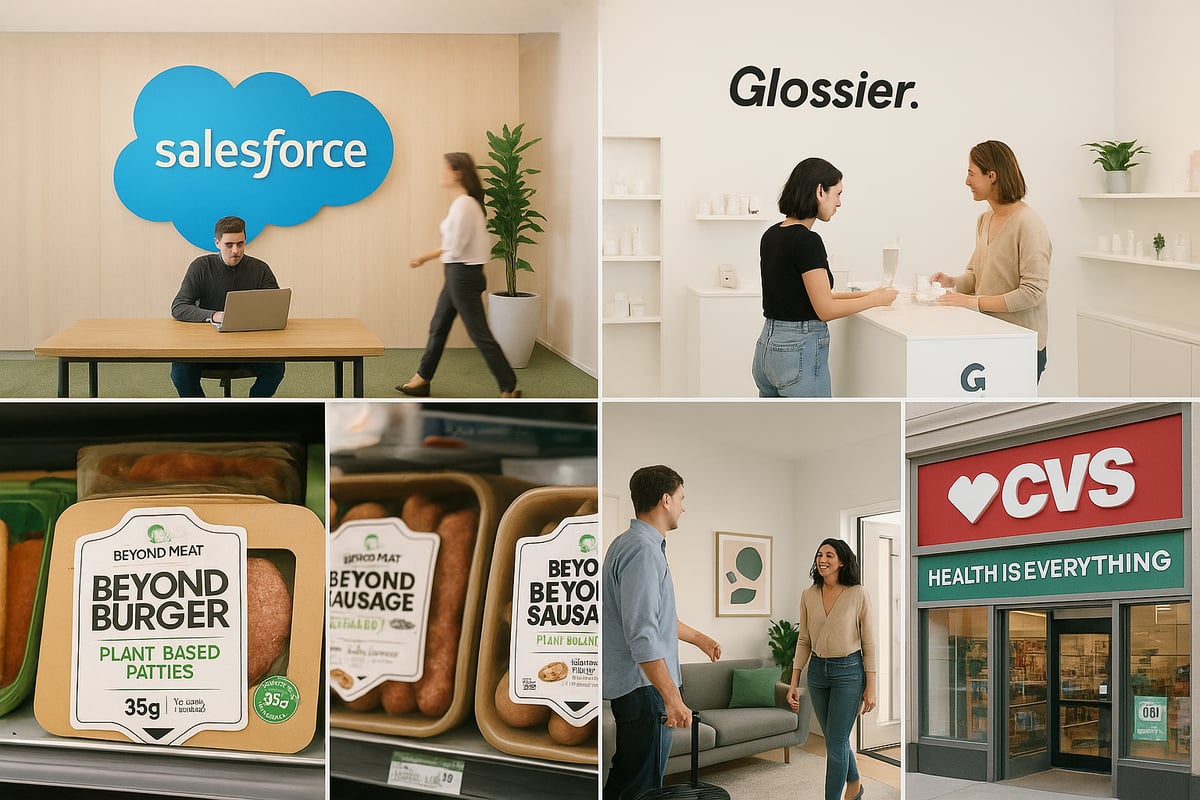
Salesforce’s brand concept as the “Customer Success Platform” reframed what a B2B solution could mean. Instead of focusing on technical features alone, Salesforce anchored its promise in a simple, emotionally resonant idea: empowering every client to succeed. This clarity allowed the brand concept to fit into any sales pitch or elevator conversation.
Key elements included:
- Insight: Businesses crave more than software—they want results.
- Promise: Salesforce delivers measurable customer growth.
- RTBs: Case studies, robust integrations, and a vast partner network.
By weaving these pillars consistently through messaging, they boosted client retention and became synonymous with cloud-based growth. This B2B brand concept shows how emotional resonance and functional proof work together for impact.
Consumer Brand Concept Example
Glossier’s brand concept, “Skin first, makeup second,” taps into the desire for authenticity and simplicity. Instead of selling transformation, Glossier built trust by elevating real skin and real voices. Their messaging pillars—community, transparency, and empowerment—shape everything from product launches to customer service. You can learn more about how messaging pillars inform a cohesive brand concept at Messaging pillars for brands.
Glossier’s concept aligns with consumer values in 2025: inclusivity, personalization, and purpose. Crowdsourced product development and user-generated content further reinforce their narrative, turning customers into ambassadors.
New Product Concept Example
Plant-based meat alternatives illustrate how a new product’s brand concept evolves through research and validation. Beyond Meat positioned itself as “the future of protein,” balancing sustainability with taste and convenience. They tested their concept through focus groups and market trials, refining their promise based on consumer feedback.
Packaging played a vital role in making their brand concept visible and memorable on crowded shelves. For insights into how packaging shapes brand visibility, see the Brand Visibility in Packaging Study. Beyond Meat’s RTBs—nutritional transparency, environmental impact, and culinary versatility—helped win over both vegans and curious meat-eaters.
Tourism or Service Brand Concept Example
Airbnb’s “Belong Anywhere” brand concept changed how people see travel. Instead of just a place to sleep, Airbnb promised connection and belonging, blending emotional and functional benefits. Their messaging built trust by spotlighting host stories and guest experiences, turning the service into a movement.
The brand concept delivered on both security (verified hosts, reviews) and emotional resonance (community, adventure). This approach helped Airbnb create global consistency while adapting to local cultures.
Healthcare/Pharma Brand Concept Example
CVS’s “Health is Everything” brand concept stands out in a regulated, trust-sensitive sector. Their messaging focuses on holistic well-being, not just prescriptions. By addressing both emotional and practical health needs, CVS built credibility and loyalty, navigating complex challenges unique to healthcare brands.
Building a Cohesive Brand Book and System
A brand concept only becomes truly powerful when it is captured, shared, and lived by everyone on your team. This is where a brand book comes in. A well-crafted brand book acts as the single source of truth for your brand concept, helping you maintain consistency and clarity as your business grows.
Purpose and Value of a Brand Book
A brand book is more than a set of rules. It is the living framework for your brand concept. It answers the questions, What do we stand for? How do we show up? Why do we matter? When your team, partners, or new hires need guidance, the brand book is their compass.
Competitor insights show that a strong brand book includes templates for everything from your positioning statement to your brand story and values. Google, for example, uses detailed internal brand guidelines to keep its global teams aligned. When your brand concept is documented and accessible, you reduce confusion and keep your message strong across every touchpoint.
Elements to Include in Your Brand Book
A complete brand book covers every building block of your brand concept. Here is what to include:
Starbucks’ brand book is a great example, outlining everything from mission to photo style. For narrative development, see Brand storytelling vs. founder's story, which dives deep into how your founder’s journey can shape a unique brand concept. Putting these elements together makes your brand concept actionable and memorable.
Creating Scalable Voice and Visual Systems
As your business grows, your brand concept must be easy to scale. This is where practical frameworks shine. Build systems for both voice and visuals so teams in different places can stay true to your core, but also adapt for their context.
Create templates for presentations, social media, and packaging. Offer clear examples of how your brand concept should look and sound. Modular systems, like those used by global brands, make it easier for everyone to apply your brand concept, whether you have two people or two hundred.
Keeping Your Brand Book Relevant and Up-to-Date
A brand concept is never static. Schedule regular audits of your brand book. Invite feedback from your team, partners, and even customers. Update your guidelines whenever you launch new products, enter new markets, or notice shifts in how people connect with your brand.
Digital trends come quickly. For inspiration on how to keep your brand concept current, review resources like Top Branding Trends in 2025, which highlights evolving design and messaging patterns. The most resilient brands evolve their brand concept without losing their core. Make updates part of your rhythm, not an afterthought.
You’ve seen how a strong brand concept isn’t just about the right words or visuals—it’s about capturing the truth of who you are and how you want your business to show up in the world. If you’re ready for your brand to feel more like you, not just in theory but everywhere you lead, you don’t have to figure it out alone. I help founders like you turn lived experience into clear, confident messaging that actually moves people. When you’re ready, Let’s shape a brand that sounds like you.